Showing posts with label women in agriculture. Show all posts

Monday, January 30, 2017

Monday Motivation: Why I Farm Roadtrip Week 39

With all the negativity going around in my Facebook newsfeed, I'm extra motivated to share these positive Why I Farm stories. As I approach week 40 of living on the road, these farmers keep me inspired.

Kansas farmer: Greg Peterson
"I farm because I think it’s a noble occupation. It is a lot of fun to work with machinery, crops and animals and to be outdoors. There’s a lot of enjoyable aspects of it, but also there’s a cause behind what you’re doing. You’re providing people with food to eat. You’re taking care of living beings. You’re taking care of the earth. It’s not a dull job. It’s full of surprises, it’s different every single day, and you get to work with your family. I think the family side is probably one of my favorite things. It’s a 5th generation family farm started in the 1800s. You think about all the previous generations, your ancestors, your grandpa, your great-grandpa working on the same land as you, doing the same kind of things as you. That’s really cool and something a lot of people don’t realize. Right now it’s my dad and my brothers and I mainly that work on the farm, but my mom and sister help too, and we’ve got a few other people that contribute. I think for us, the brothers, we grew up playing with farm toys together and wanting to grow up to be like our dad. That was always the dream." -Greg Peterson of the Peterson Farm Bros near Assaria, Kansas


Virginia farmer: Lauren Arbogast


"I grew up in the city. Eleven years ago I jumped hook, line and sinker into agriculture when I married into a third-generation family farm. My overall perspective is that if this is where my journey was leading and this is really what I was called to do, then I’m going to embrace that and do everything I can to be fully present on that journey. I wouldn’t raise my family any other way. Sometimes I’m jealous when I see my kids in the tractor or running down the long lane to the bus in the mornings. I just think, 'How blessed are we that we get to raise our kids in this manner with responsibilities and chores? And teach them to steward the environment, the animals and the land we were blessed with and given charge of.' For me, that’s a lot of why I farm and why I do what I do." -Lauren Arbogast of a diversified crop and livestock farm near Rockingham, Virginia


Minnesota farmer: Wanda Patsche
"God has provided for us. He allows us to farm, and we just love it. We’re thankful that He put us in this position. It's very humbling, but at the same time we're very proud to be farmers. To me, there’s nothing more special than providing food for other families, and that’s what we do out here." -Wanda Patsche, of Minnesota Farm Living, raises row crops and pigs with her husband near Welcome, Minnesota

I hope you're challenged to be thankful for the opportunities you're given this week. Go out and make the most of it! Happy Monday! Thanks for reading!

Monday, January 23, 2017

Monday Motivation: Why I Farm Roadtrip Week 38

I don't know about you, but after a weekend full of trudging through mud and a disappointing Packers game, I was in serious need of some motivation this morning. Fortunately, thanks to more than 30 weeks on the road, I knew the perfect solution. After revisiting these Why I Farm stories, I was ready to take on the week, rain or shine.

Indiana farmer: Scott Sands and family
 "I farm because God put the love for it into my heart. We’re just a small percent of the population so I feel like it’s an honor to farm, really. Not everybody does this, and it’s such a big job, and a lot of responsibility. I feel like I farm because I was given the love to do it." -Scott Sands and his family, of Claypool, Indiana


Indiana farmer: Brian Scott
“I love farming. I had to leave for about six years to know that. It’s hard to find the words, but it’s where I’m supposed to be, I know. I don’t think of it as a job. I hardly ever get stressed out. When I’m not working, I think about it and that’s okay. In my old job, when I was thinking about work when I wasn’t at work, that was stress. It’s a lifestyle as much as a career. It’s the freedom to take your own destiny in your hands and bring your family along with you.” -Brian Scott of The Farmer's Life in Delphi, Indiana

Minnesota farmers: Jonathan and Carolyn Olson
"I’ve been given the wonderful opportunity to farm. I love being out on the land. Sometimes as an organic farmer we do more passes because we’re doing more cultivation. We see the crops more, but I love every pass. It’s a great place to raise the kids and I love the lifestyle. Even though the hours are crazy sometimes, I truly enjoy it. I like being able to work together with my wife on the farm. Why do I farm? I guess it’s the love of it all." -Jonathan Olson and his wife Carolyn, crop and lifestock farmers near Cottonwood, Minnesota

This week was another great reminder to be thankful for the opportunities I've been given and do my work with passion. I hope these stories challenge you as well. Happy Monday! Thanks for reading!

Monday, December 12, 2016

Monday Motivation: Why I Farm Roadtrip Week 32

As the momentum of the Why I Farm Roadtrip continues, the pace gets faster and faster. Over the last month, I had to take a step back from other commitments, including this blog, to make sure I was turning around farmers' stories as fast as I could. Now that I'm caught up, I'm glad to be back sharing my reflections and experiences. I've really missed having this outlet to post about people and places I want to remember.

With Christmas rapidly approaching and the end of 2016 just around the corner, I'm well beyond the half way mark of this adventure. I say this all the time, but it's hard to believe how quickly this experience has flown. As I travel, I notice how each farmer leaves their own mark, shaping my outlook. Here are a few I'm thinking about this week:

New Jersey farmer: Bea Tassot
“I think farming is just something that’s in your genes. I mean really, I’m sincere about this. My husband has dedicated his life to this. We are running a 400 beehive operation in Milford, New Jersey. It’s really my husband’s job. He’s been a bee keeper since he was five years old in France. He learned bee keeping from his great uncle in Burgundy. We came from a big city, Paris, but it was always in his mind, ‘That’s what I want to do one day.’ We were very lucky. We have a gorgeous farm. I would not trade this to go back to a city, not at all. It is so peaceful. Each night you just sit out on your deck and it’s just silence. It’s green and you have the animals, it’s beautiful.” -Bea Tassot of Tassot Apiaries Inc. / Buzzing Acres Farm in Milford, New Jersey

New Hampshire farmer: Alicia Pedemonti
"After college, I came back home to the farm and started trying to envision how I wanted it to be. That was a really emotional decision for me to make. Farming and raising pigs in particular was something I always did with my dad. So going back really took a lot of thought. I remember the first Pork Producers meeting I went to after college, after he had died. It was really emotional. I kind of sat in the parking lot before, unsure if I was going to go in. And then the drive home was a lot of self-reflection, talking aloud to my dad, and very emotional. It was such a big part of my relationship with him and my life growing up, I knew it was something I needed to continue and I really wanted to. I was starting to look ahead, so in my early 20s I knew having kids wasn’t too far off. I wanted to make sure I was trying to create the lifestyle and image that would be something my children could be a part of, because I know how important it was to me growing up and I wanted them to have that same experience." -Alicia Pedemonti, pig farmer of Hopkinton, New Hampshire

Wisconsin farmer: Matt Rezin
"I’m an Ocean Spray cranberry grower. I’m actually an 8th generation grower and my cranberry marsh, my great-great grandpa started it back in 1931. We’ve been growing cranberries since 1886. It’s kind of in my blood so I just keep doing it. For me, it’s not a job. It’s more of a lifestyle. My kids are out there working with me. I’m still working with my dad. My grandpa is 86 years old. He’s still out on the marsh, I’m still working with him. It’s a family ordeal. My grandma is still out there doing stuff. My mom gets out there and helps harvest. It’s huge – family. The thing with the cranberry industry, a lot of the marshes and bogs around here, we’re all related. We’re all cousins. So we’re going over to other people’s marshes and saying hi and helping out here if they need that or borrowing equipment if they need equipment. I love what I do." -Matt Rezin of Warrens, Wisconsin

As I think about these three farmers, I'm challenged to find beauty in my surroundings, follow my calling even when it requires tough decisions, and be thankful for my family. I hope their stories challenge you to do the same. Happy Monday! Thanks for reading!

Tuesday, November 10, 2015

Ag Jobs A to Z: Graphic Designer

Photo credit: Beck's Hybrids
Life changing. That's the best way to describe last summer's internship with Beck's Hybrids. I learned so much about myself, my work habits, and agriculture. At the same time, I worked next to some of the most talented communicators and marketers in the industry. 

Jenna is a graphic designer at Beck's and is part of the team that made my experience so great. Watching her work ethic, creativity and passion taught me about the type of employee I want to be. I'm so thankful she's sharing her career story for today's Ag Jobs A to Z blog!

1. Where did you go to school?
I attended Oklahoma State University in Stillwater, Oklahoma and graduated with a degree in animal science and an ag economics minor. After a year and a half in the work force, I went back to school at a private art school in Kettering, Ohio, The School of Advertising Art (saa) for a diploma in advertising art. 

2. What inspired you to go into graphic design?
I’ve always been very artsy, and when I was deciding where to go to college, as a high school junior, I was torn between my passion for agriculture and my passion for art. I ultimately chose agriculture because that’s where I felt led, but I stayed involved with art: drawing on my own, taking a few electives here and there. Then I graduated and went into ag sales, but I found myself more drawn toward the marketing materials I was using to help make sales and that were used to advertise to my customers. Also, while working with dairy farmers, I saw a need for positive public relations and the promotion of agriculture in a positive light to people who don’t understand all of our agricultural practices and why we do them. These large producers didn’t have websites or promotional material, or any real way to promote themselves or their business. But, it wasn’t about promotion in the sense of making more money, it was in the vein of improving public understanding and perception. If your neighbors understand why you do something, and what you’re doing on your farm, when that inevitable manure spill happens, hopefully they might be more understanding. Or if they understand why gestation crates for sows are for the safety of the litter, for example. I was drawn to promoting agriculture, and improving the image and understanding of the industry. 

After a year and a half of not being fulfilled in my sales role, I left the company and with no job lined up, wasn’t sure what I was doing. I was looking for jobs and I ran across a communication position for Select Sires, a reproductive management service for dairy and beef producers, but I didn’t have the graphic design skills to fill the role. I happened across a graduation announcement from a local high school youth in my hometown that was attending saa. I instantly felt led to investigate the school. It seemed to provide the training I would need to fill a role like the one at Select Sires. So I submitted my high school art portfolio and college transcript, and was awarded a scholarship for the combination. Saa is focused on real world, tangible skills, and you are on a computer from day one of classes. It is small and the instructors are design professionals actually working in the industry. 

3. How long have you been working in graphic design?
Just over four years. I graduated from saa in 2011 and immediately started working for the international headquarters of the fraternity Beta Theta Pi in Oxford, Ohio. It wasn’t anything I’d envisioned. I’d planned to find a marketing role for an ag company or start consulting and immediately changing the world, but as all things happen for a reason, and typically not like you plan, the opportunity to work for a non-profit in Higher Ed appeared. I spent three years with the fraternity, and learned SO much, but then, like every opportunity I’ve had, an acquaintance from high school worked for Beck’s Hybrids in Atlanta, Indiana. He kept encouraging me to reach out to the marketing director and share my portfolio. Finally, after about three conversations, I followed through, and I was invited in for an interview and was hired. I am approaching one and a half years at Beck’s, and I consider it my dream job, combining ag and art. I work with amazing people who share a passion for agriculture but also wish to positively influence the public, with campaigns showcasing the hearts and souls of farmers and why they do what is often a thankless job, Beck’s “Why I Farm” campaign. 

4. What skills are necessary for a career in graphic design?
Your basic computer skills and some ability to sketch or draw are givens. Being creative is also a good skill to have, and the desire to learn and explore new technologies and methods and styles, as the world of design is always evolving. But one thing I cannot stress enough is the ability to write. You don’t have to be a novelist or grammar maven, but I remember one instructor saying, “You can have a great eye and design a great ad, but so can many other people. If you can write copy or an engaging headline or tagline, that takes you to the next level.” I enjoy writing, so I put that skill to good use on many of my projects. 

5. How does your job fit into the agricultural industry? (Who do you work with? Who do you help? Who helps you?)
I work for a company that has an in-house design team, so my “clients” are my company and any subsidiaries of my company. But they are clients none-the-less and I still have to meet their needs and know my audience. My audience is farmers. And right now, farmers who are 45-65 years in age, but not forgetting that the next generation is quickly taking over that target audience spot. So we need to be adapting how we market and design, like the platforms we use. I will work with other companies if we’re co-branding or working cooperatively with a partner on a project. I have a creative director who I work with, as well as other designers and video production specialists that all come together to complete a total campaign or provide support on a project, like photography needs. 

6. What career/internship opportunities are there in graphic design?
Career types:
Print focus - graphic design, production artist (Agency, in-house, non-profit, freelance)
Web/digital design (Agency, in-house, non-profit, freelance)
Web backend design (coding, html) 
Print production (working at a printer)
Art Director (agency or in-house) – responsible for managing the designers and over seeing that all projects are being completed 
Creative Director (agency or in-house) responsible for overall creative vision for the company or project

While there are specific internships for design (I completed an externship at a small creative agency in Dayton, Ohio) sales and marketing internships shouldn’t be overlooked, either. Being in sales taught me a lot about marketing, but primarily how to read people and understand their wants/needs. That’s taken me very far in my success as a designer and marketer. Classes and tutorials can teach you how to use the tools and design, but sales and marketing taught me how to work with people, read people, and better use my design skills to influence people.

There are a few options out there when it comes to graphic design industry segments:
1. Agency – High level design. This is long hours and intense work with many different clients who are outsourcing projects to a creative agency. Many designers will start as production artists, where they are given the creative concept by their creative director and will produce it to spec. Also, there are account managers where you will work with the client to understand, meet and convey their project needs, and help keep the project on schedule. You will have the opportunity to work with many different industries and clients and the scope of projects is large, but the hours can be long, and you are expected to work until it’s done, and your work better be great. The rewards you’ll reap, though, are also great. 
2. In-house – The idea of in-house teams is growing and expanding. I work for an in-house team, where a company hires all the components of an agency, from a creative director, to graphic designers and video specialists to copywriters. They eliminate the need to outsource projects to creative agencies, because company paid employees can do all the work. In-house has gotten the wrap of not being as talented or up to par with agencies, but this isn’t true. The quality of work can be just as high as agency, and I personally feel, better, because employees have a personal investment in the company, not just “Another project from another client from a company I don’t know anything about.” At Beck’s, we have many “clients.” From the main brand to departments and entities that fall under the Beck’s umbrella, I feel like I can constantly be challenged with new and different projects. 
3. Freelance – for the designer who wants to control their hours and when they work, whom they work for, how much they make and what they work on, freelance is great. You’ll also likely work from your home or a rented office space, probably won’t have co-workers unless you partner up with someone, and you’ll be responsible for obtaining work, which unless you have a built up list of regular clients and steady work, could be stressful as sometimes there might be dry periods when you don’t have work. 
4. Non-profit – In many cases, a designer working for a non-profit is dealing with a reduced budget, and are forced to be a jack of all trades, because the non-profit cannot afford to outsource work or hire an entire team, so the designer may be writing, designing and handling the printing/execution of the project, as well as the social media. But this allows for greater creativity too! Working within confines of a limiting budget forces you to go outside the box and find alternative solutions that have big bang for the buck. The budget may be smaller, and the restrictions greater, but the reward of having an impact on your audience and helping a non-profit are great. Again, a large budget and fancy tools don’t define a great designer. 
5. Print Production – this is strictly print design - another option would be to work for a printer or in prepress for a printer. You’d be responsible for making sure a project or job were set up correctly to be printed, and then operating the presses/tools, executing the finishing of the projects and communicating with the project lead or designer. 

7. Is there anything else you would like a student audience to know?
Knowing Photoshop and InDesign and having the latest software will not make you a great designer. They are tools to help elevate your work, but they do not make you a designer. 90% of being a successful marketer and designer is knowing your target audience and smart design. Just because something looks great doesn’t mean it will resonate with your audience. I can’t stress enough that every piece you design is meant to influence and affect the viewer on an emotional level. And being able to convey that and understand that will help make you a successful designer.

RESEARCH. Know whom you are marketing to, know who will be reading your ad. You have the ability with words, type, color and imagery to influence a demographic. This all comes from observing your surroundings, other people and how they look at things and take things in, and relying on more than just design skills. Being well rounded as a designer will make you so much more appealing to perspective employers. Don’t dismiss your creative writing class or your gen ed biology, you never know when having that knowledge will come in handy. Learn to read people, learn to observe your surroundings, and most importantly, learn to learn. That skill will take you farther than any class you take.  

Huge thanks to Jenna for her answers and advice. I'm glad she could be a part of Ag Jobs A to Z! It's so great how art and agriculture came together in her career journey. 

Thanks for reading!

Monday, March 23, 2015

Monday Night Movie Night: Why I Farm

I haven't posted a Monday Night Movie Night for a long time, but after the release of the latest Why I Farm video by Beck's Hybrids a few weeks ago, I couldn't resist. Also, since March is Women's History month, this clip seemed fitting. As I mentioned in another blog post, I am thrilled to work for Beck's this coming summer as their marketing communications intern, and am thankful for the opportunity I had to spend part of my Christmas Break learning the behind the scenes stories of this Why I Farm campaign.


Women in ag are constantly inspiring me. Search social media for #FarmHer and #WomenInAg for hundreds of other awesome stories. Thanks for reading! 

Wednesday, October 15, 2014

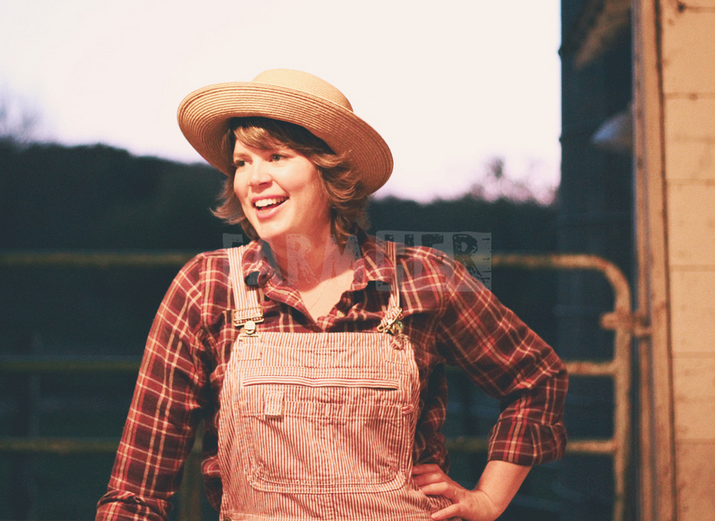
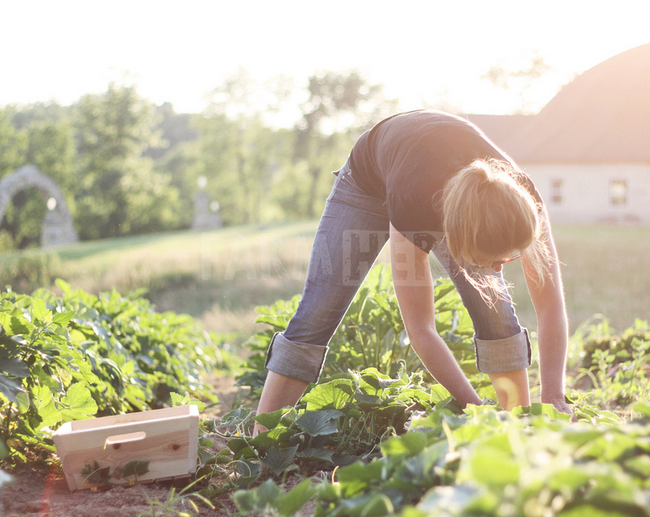
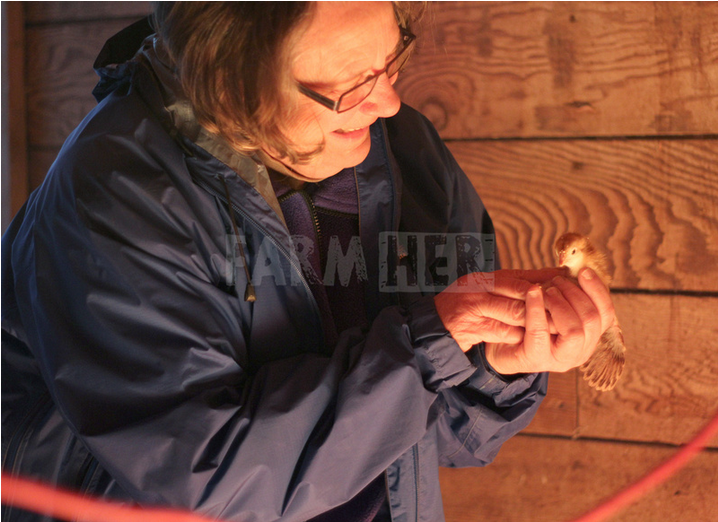
Wordless Wednesday: FarmHer

For this week's Wordless Wednesday I'm sharing another guest photographer's amazing work! Last week at the AgEI Entrepreneurship Roundtable, I was blessed to meet Marji Guyler-Alaniz. This sweet lady is on a mission to share the story of women in agriculture through her talents behind the camera. Her photos are currently featured at the Des Moines Social Club and have been picked up by Huffington Post and the popular site, Upworthy. I hope you are inspired by each of these photos as much as I have been!


I'd love to share more about my time with Marji and her business, but since I cheated last week, I better keep this Wordless Wednesday on track. Please visit the FarmHer website for more details and "Like" the FarmHer Facebook page to see the latest happenings with the project. Thanks for reading!